

Plugin Easy Language for WordPress
Extends a WordPress website with the function of Easy and Simple Language
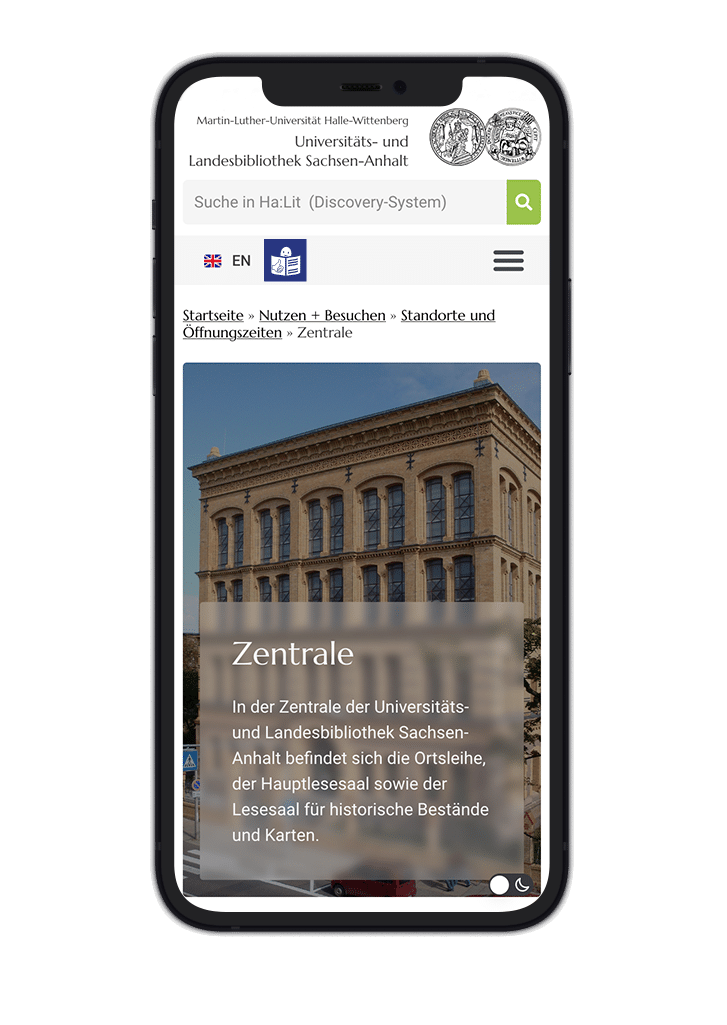
Translate your WordPress website into Easy Language
© European Easy-to-Read Logo
In the course of the accessibility of Websites and online shops Easy language is an essential building block to make the statutory requirements implement. In addition, plain language expands your target group and can improve the conversion rate of your website or webshop.
Automate translation into plain language with AI
In addition to manual translation, the WordPress plugin for plain language also offers automated translation with the help of AI.
To do this, the plugin connects an external translation tool via an interface (API). The translation tool is not part of the WordPress plugin, but is provided by an external provider. of our partners offered.
As soon as you enter a valid API key, you can automatically translate any page or post into plain or simple language at the touch of a button.
Of course, you can adapt and optimise the simplified texts manually at any time.
The plugin is compatible with these page builders, among others

Elementor
Gutenberg
WP Bakery
Avada
Divi
Our partners for AI-based translation into plain language

You have the choice between three different providers:
To use the respective service to its full extent, you need an API key from the provider.
Comparison of our translation partners
SUMM AI
Get started straight away with a 9,000 character test quota-
Simplifications for German (English and French*)
-
Simplifications through AI and customised programming
-
Language levels: easy language, simple language
-
Test quota (9,000 characters) included in the plugin free of charge and without registration
* Please enquire about these languages with SUMM AI
capito
Test 2 weeks free of charge after registration-
Simplifications for German (English and French)
-
Simplifications through AI and customised programming
-
Language levels: A1 (very easy language), A2 (easy language), B1 (simple language)
-
Registration and booking via Capito website required
OpenAI
About ChatGPT-
Simplifications for German
-
Simplifications through AI at your personal request
-
Language levels: enter your own Promt (prompt)
-
Registration (free of charge) and booking via OpenAI website required
Compatible with multilingual plugins
Technically, the Easy Language is another language such as English or French. However, the Easy Language is not (yet) a standard language according to ISO 639-1 and is therefore not included in the common plug-ins (WPML, Polylang, TranslatePress) are listed. If you are already using one of the above plugins for multilingualism, our plugin will add plain language to it.
Current regulations, laws and the Barrier-Free Accessibility Improvement Act (BFSG)
Since the 22 December 2016 is EU directive for accessible websites WCAG 2.1 for public institutions are in force.
Provisions at the federal level:
In Germany, the Barrier-Free Information Technology Ordinance (BITV 2.0) has been in force since 25 May 2019. The BITV 2.0 implements the requirements of the above-mentioned Directive (EU) 2016/2102 on website accessibility for public authorities um. However, BITV 2.0 only applies to websites of institutions under public law that are subject to the Covenant subordinate are.
Provisions at country level:
The accessibility and plain language requirements for websites of institutions and bodies of the Federal statesare covered by the respective equality laws of the Länder. This means that the federal states have their own procedures for implementing the EU directive. An overview of the digital accessibility of public bodies in the federal states can be found here. BITV 2.0 in the Länder
With our plugin for easy language of WordPress websites, the already existing regulations can be technically implemented. The translations or simplifications can be created completely manually or with the support of AI.
Provisions for the private sector since 2025
The Accessibility Reinforcement Act has been in force since 28 June 2025 apply. Since this date, manufacturers, retailers and importers with electronic business transactions (this includes e-commerce or an online shop) have also been obliged to implement the provisions on accessibility and plain language.
Important questions on the topic: Which websites and webshops are affected?
- Regional authorities (municipalities, municipal associations, federal states and federal government)
- Staff and real corporations (chambers of industry and crafts, professional chambers and universities)
- Corporations under public law
The Barrier-free Information Technology Ordinance (BITV) also applies
for associations in which at least one public body is involved.
- e.g. if the association is predominantly financed by the federal government,
- or the association operates beyond the area of one country
- or the Federation owns the absolute majority of the shares in the association
- or the Federation is entitled to an absolute majority of the votes in the association
Predominant financing by the federal government is assumed if it contributes more than 50 percent of the total funds.
For websites subject to BITV 2.0, at least the homepage and the accessibility statement must be available in plain language.
The Barrier-Free Act (Barrierefreiheitsstärkungsgesetz, BFSG) covers manufacturers, distributors and importers of products as well as service providers.
-> Products that are to be designed barrier-free:
- Computers, notebooks, tablets, smartphones, mobile phones
- ATMs, ticket and check-in machines
- Televisions with internet access
- E-book readers
- Router
-> Services are to be designed barrier-free
- Telephone services
- E-books
- Messenger services
on mobile devices - Services offered (including apps) in interregional passenger transport
- Banking services
- e-commerce (this includes online shops and websites)
- Passenger transport services (for urban, suburban and regional transport services only interactive self-service terminals)
Exceptions small enterprises
Micro-enterprises (less than ten employees and no more than €2 million annual turnover) providing services are exempt from the law.
Exception to the exception
However, micro-enterprises that put products into circulation are covered by the FSOA.